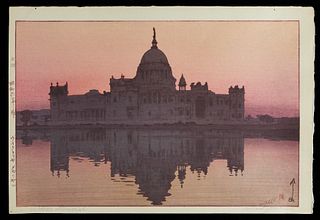
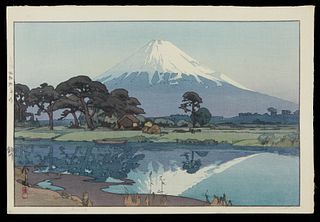
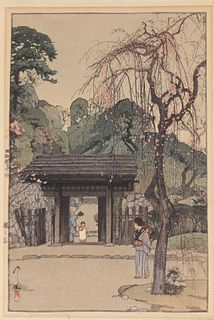
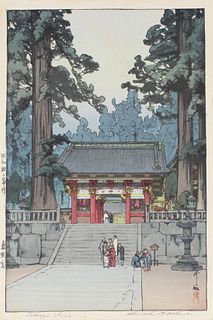
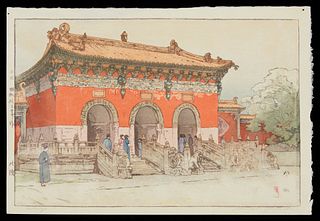
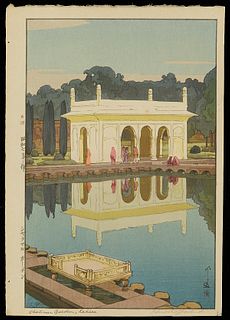
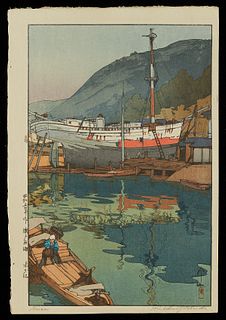
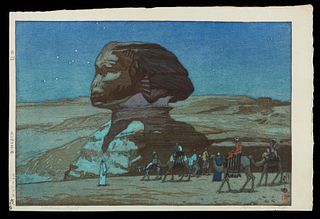
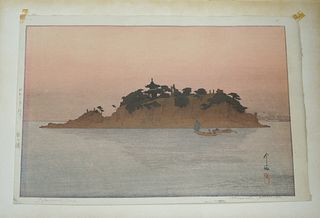
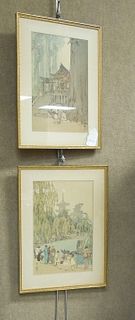
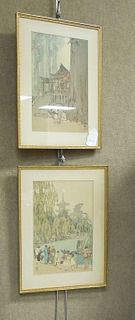
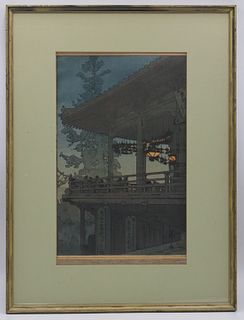
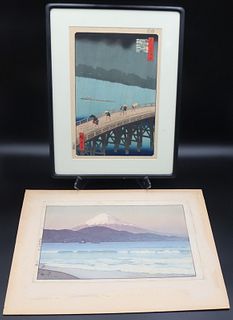
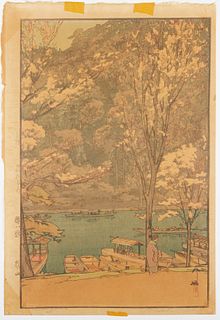
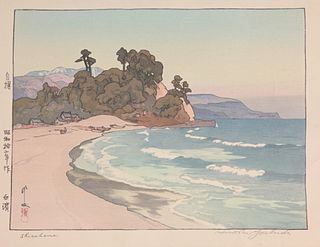
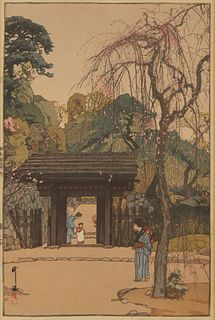
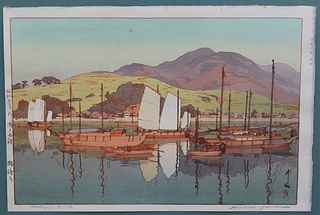
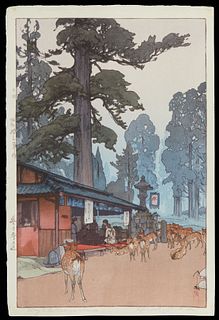
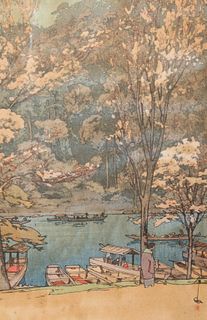
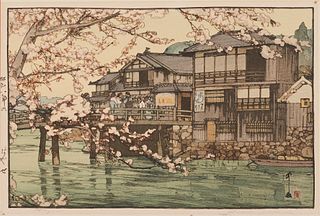
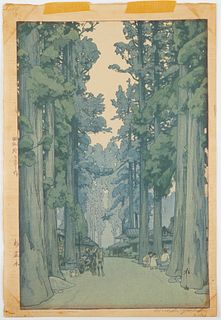
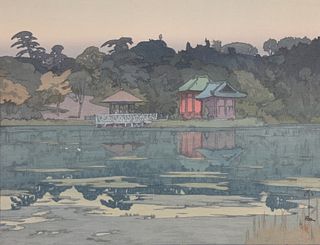
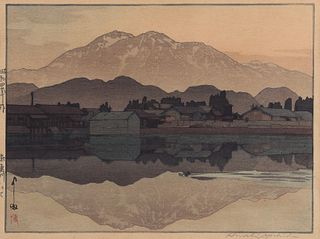
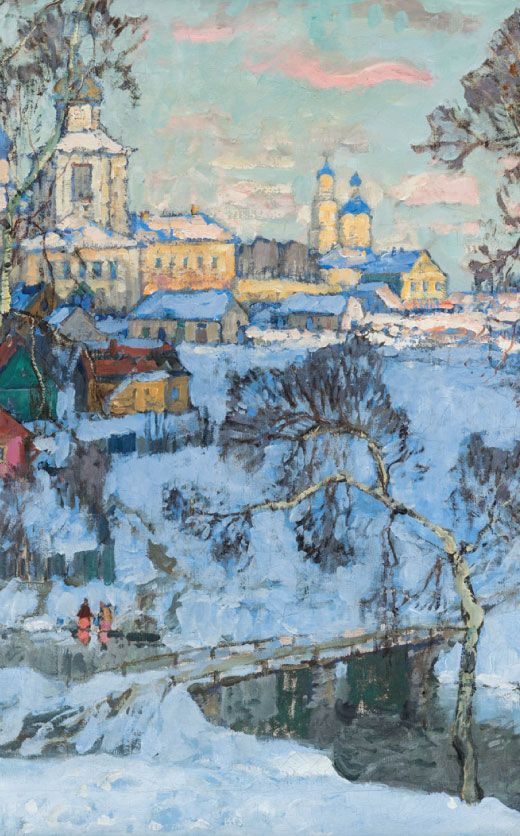
A leading painter and woodblock printmaker, Japanese artist Hiroshi Yoshida played an important role in revitalizing Japanese printmaking in the 20th century. In addition to being highly regarded as a landscape artist in his time, Hiroshi Yoshida also played an important role in the shin-hanga movement. In the early 20th century, fine color gradations were somewhat unusual in woodblock prints. In his prints, Yoshida Hiroshi developed fine color gradients to produce a unique effect. In his paintings, Hiroshi brings together traditional Japanese art forms ukiyo-e and Western oils and watercolors, depicting a variety of subjects, particularly landscape paintings and architectural studies.
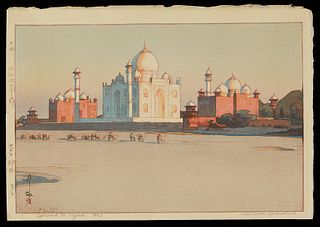
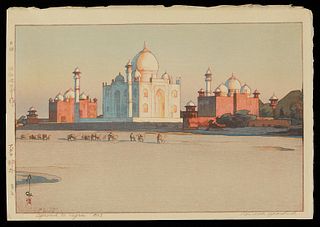
A trained Western oil painter and watercolorist, Hiroshi Yoshida is credited with introducing the style to Japan during the Meiji period. As well as exhibiting a wonderful sense of color blending, his ability to portray the flowing water and its reflection is exemplary. To convey different moods, Yoshida used different color schemes while using the same blocks. This is best illustrated by Sailing Boats, which appeared in 1921. An album of prints showing scenes from Singapore, Pakistan, Afghanistan, and India was released in 1931. Various moods and colors were captured in six of these works of the Taj Mahal.
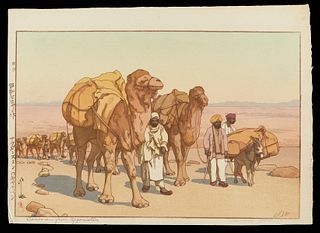
Hiroshi Yoshida's prints are often inspired by his extensive travels, reflecting rich seasonal atmospheres and nuanced light. Additionally, he was an avid mountaineer, with many of his prints featuring the mountaineering excursions of his travels and alpine landscapes. Yoshida was especially known for his wooden block prints of non-Japanese subjects, including the Taj Mahal, the Grand Canyon, the Swiss Alps, and several other national parks. Other famous works include depictions of the Acropolis in Athens, the Sailing Boats series, Egypt's Sphinx, Himeji Castle, the Sumida River, the Taj Mahal, peaks of the Kanchenjunga range, and the Afghan caravan.
The technical mastery of Yoshida's art and the artistic vision of the artist continue to be admired. Several of his prints and paintings can be found in museums all over the world, including the National Museum of Modern Art in Tokyo and the Metropolitan Museum of Art in New York. He continues to inspire contemporary printmakers with his creative vision and unique methods. All the artist’s prints are signed with the pencil signature "Hiroshi Yoshida" and marked with a self-printed jizuri seal. Each print is inscribed with Yoshida in brush and ink, along with the red "Hiroshi" seal.
Hiroshi Yoshida Artworks for Auction
Bidsquare online auction offers a wide selection of Hiroshi Yoshida prints for sale. Browse our catalog for Hiroshi Yoshida's artworks, including Japanese woodblock prints.